Acupuncture uses needles. Moxibustion uses heat.
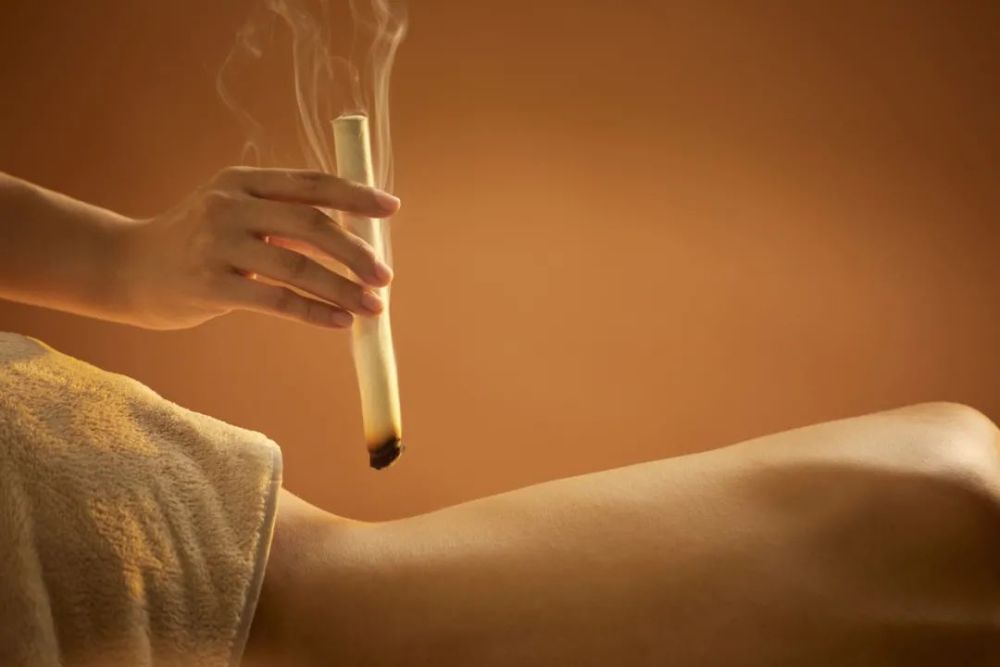
“Moxa” is a plant — mugwort. You dry it, crush it, and roll it into a stick that looks a bit like a cigar. You light the stick and hold it near certain parts of your body, using the heat to warm them.
That’s it. Just warming with fire. Can that really treat illness?
In TCM, some health problems are “cold” problems. Cold hands and feet. Cold pain in the belly. Joints that feel worse in cold weather. Menstrual pain that feels better with a warm compress — these are signs of cold. Where there’s cold, blood and qi flow slowly. Things get stuck. Things hurt.
The heat from moxibustion can go deep into your skin, chase the cold away, and get qi and blood moving again.
The most common place for moxibustion is about three finger-widths below your belly button. This point is called Guanyuan — the “Gate of Origin.” It’s believed to be the root of your body’s yang qi. Warming this point warms your whole body.
Another common spot is below your kneecap, called Zusanli — “Leg Three Miles.” An old saying goes: “Regular moxa at Zusanli is better than eating a whole chicken.” It means this point is that good for your energy.
The feeling of moxibustion is warm and comfortable. Not like an open flame — more like a gentle heat that seeps deep into your body. After a session, you feel warm from the inside out.
You can do moxibustion at home. Moxa sticks are easy to find at herb shops or online. But be careful — moxa sticks have an open flame. Don’t burn your clothes or your hair. Keep a cup of water nearby. When you’re done, completely put out the stick. Pregnant women should not use moxa on their belly or lower back. Don’t use it when you have a fever.
The best approach: go to a trained TCM practitioner first. Let them show you where to apply it and for how long. Then you can do it yourself.
Heat is medicine. Sometimes your body doesn’t need a pill. It just needs warmth. That’s exactly what moxibustion gives.